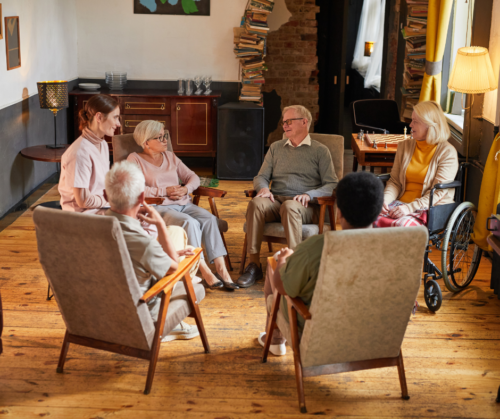

Even when family members visit elderly residents of nursing homes, the sense of loneliness can still be very present. It is not uncommon for some residents to experience moments of emotional closure, thanks to the infrequency of visits or the perception of isolation, despite the presence of other people in the facility. In these contexts, the risk is that emotional distress progressively translates into a condition of greater general fragility, also affecting physical well-being.
The opportunities for relational stimulation, lightness and shared participation, in fact, are often limited in the daily life of these environments.
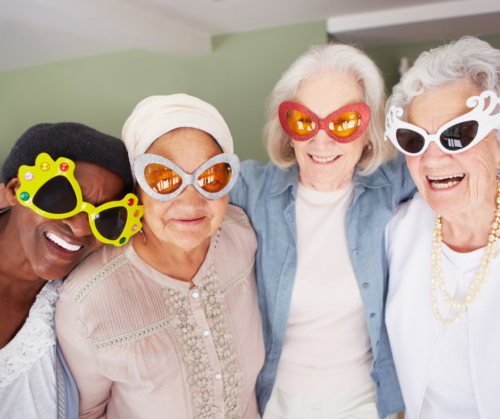
Activities based on playfulness, involvement and spontaneous expression can offer seniors an important socialization tool, helping them to re-establish a more lively contact with others and with themselves. Creating moments of active participation allows you to break the sense of isolation, lighten inner tensions and foster a more positive emotional climate. In this context, the playful dimension becomes a concrete resource to counteract stress, loneliness and emotional closure, stimulating more open thoughts and greater relational availability. On a physiological level, experiences of this type can also produce favorable effects: they help to relax the body, promote better regulation of blood pressure, support cardiovascular balance and promote a general condition of greater well-being.
Retirement
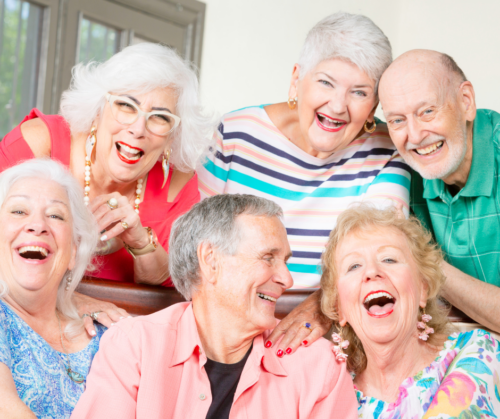
A stressor for the elderly is represented by the feeling of “being useless” after a life of work or dedicated to raising children and grandchildren. The resulting frustration can be very harmful to your health. Here laughing together with a group helps to overcome insecurity and contributes to increasing self-esteem.
No Strings Attached
Playing with a group is very important for those who suffer from lack of human contact. Many feel the need to share their emotions: playing helps to feel part of, facilitates the sense of belonging to a group and the bond that is created with the people with whom you laugh together is very strong, generating feelings of closeness and fraternity.
Lack of mobility
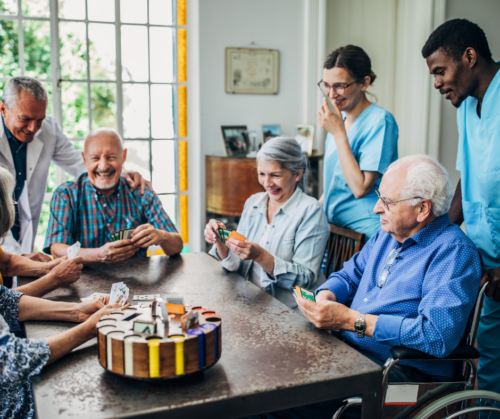
Physical immobility damages limbs and muscles. By playing, the production of endorphins is increased and this relieves the sensation of pain. Diaphragmatic movements increase lung capacity and give a real massage to the internal organs. The cardiovascular system also gets its benefits. So this practice is beneficial both to those suffering from loneliness and to those who are immobilized in a wheelchair.
Decrease in intellectual faculties
With advancing age, one can fall into senile dementia or contract Alzheimer’s disease. Actions that were previously easy to perform, with the onset of the disease, are no longer so. And humor cannot bridge the gap because the jokes are not understood. So playing can be a valuable help because it activates the body more than the mind. And then you find a way to cheat the disease and get the benefits provided by the practice at all levels because you don’t need any mental skills.
Ageless Laughter: Playing is the true fountain of youth!